
Imagine sending a client a presentation you spent hours preparing, or sharing photos from an event with friends. Afterward, you might write, “I hope you liked it it!” The sentence is short, friendly, and easy to understand, but it is not always the best choice for every situation. Depending on your audience, relationship, and purpose, a more specific alternative can sound warmer, more professional, or more natural.
“I hope you liked it ” expresses a friendly wish that someone had a positive experience with something they watched, read, attended, received, or took part in. It is common in emails, conversations, presentations, social media posts, customer communication, and everyday English.
Knowing alternative ways to say “I hope you liked it ” helps you avoid repetitive wording and choose language that matches the situation. A professional email may benefit from a polished expression such as “I hope you found it useful,” while a message to a friend may sound more natural as “Hope you had a great time.” For ESL learners, understanding these differences is especially useful because English expressions often communicate subtle attitudes beyond their literal meaning.
What Does I hope you liked it Mean?
I hope you liked it is a shortened form of “I hope you liked it pe you enjoyed it or I hope you liked it pe you enjoyed yourself.” It expresses a positive wish that someone had a pleasant or satisfying experience with something they received, watched, read, attended, or participated in. It is commonly used after events, activities, meals, trips, presentations, entertainment, and shared experiences.
In simple terms, I hope you liked it means “I hope you had a good experience.”
The exact meaning depends on what came before it. For example:
- After a presentation: “I I hope you liked it the presentation.”
- After an event: “I hope you liked it the event.”
- After sharing a meal: “I I hope you liked it dinner.”
- After sending an article: “I hope you liked it the article.”
- After a trip: “I hope you liked it your vacation.”
- After giving someone a gift: “I I hope you liked it the gift.”
The phrase usually communicates goodwill rather than a demand for feedback. It gives the other person room to respond naturally.
Origin & History of Hope You Enjoyed
The expression does not have a single known historical origin or a specific person credited with creating it. It developed naturally from ordinary English constructions involving “hope” and “enjoy.”
The word “hope” has a long history in English and is associated with desire, expectation, or a positive possibility. “Enjoy” entered English through Old French and ultimately traces back to Latin roots associated with taking pleasure or satisfaction from something.
The construction I I hope you liked it follows a familiar English pattern in which a speaker expresses a positive wish about another person’s experience. Over time, especially in informal writing, the subject “I” is frequently omitted:
“I I hope you liked it the show.”
becomes:
“I hope you liked it the show.”
This shortening is especially common in modern messages, emails, social media captions, and conversational digital communication.
How the Meaning Evolved
The basic meaning has remained remarkably stable: the speaker hopes the recipient experienced something positively. What has changed is how widely the expression is used and how informal its shortened form has become.
In earlier formal correspondence, writers were more likely to use complete constructions such as “I hope that you enjoyed…” Modern communication favors brevity, particularly in email, texting, messaging platforms, and social media.
Today, the phrase can function as:
- A friendly closing
- A polite follow-up
- A customer-service expression
- A social-media caption
- A conversational response
- A transition into a request for feedback
Its flexibility explains why it remains common in contemporary English.
Synonyms & Alternatives by Tone
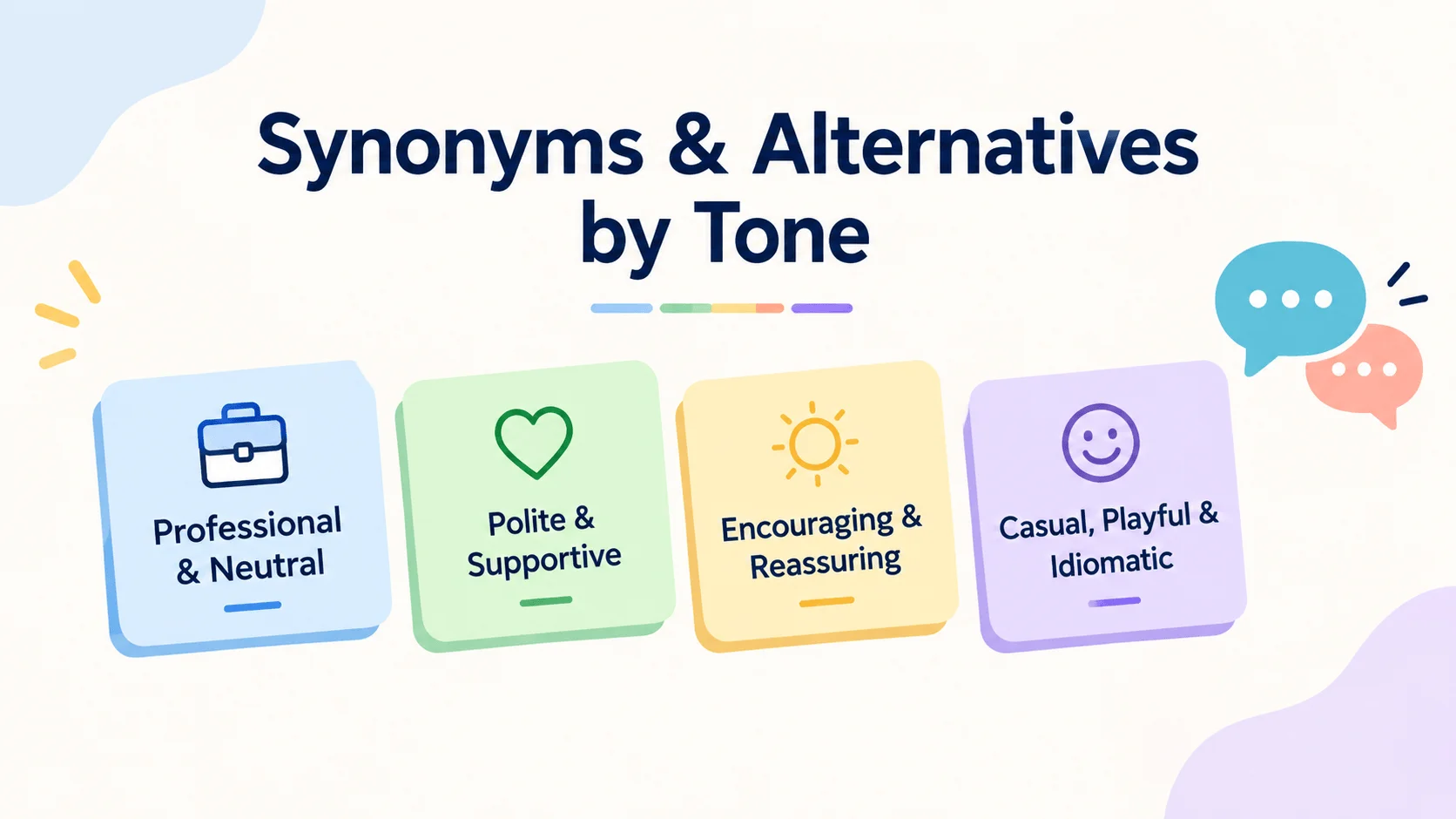
There is no single perfect replacement for I hope you had fun The best choice depends on what you want the recipient to feel and what you want them to do next.
Professional & Neutral Alternatives
- I hope you found it useful.
- I hope you found it valuable.
- I I hope you had fun the presentation.
- I hope the information was helpful.
- I hope you had a positive experience.
- I hope you found the session informative.
- I hope the experience met your expectations.
- I hope you found the content engaging.
Polite & Supportive Alternatives
- I hope you had a great experience.
- I I hope you had fun your time.
- I hope you had a pleasant time.
- I hope you found it helpful.
- I hope everything went well for you.
- I hope you got something useful from it.
- I hope you found it worthwhile.
Encouraging & Reassuring Alternatives
- I hope you got what you needed from it.
- I hope it gave you some useful ideas.
- I hope you found it worthwhile.
- I hope it was helpful for you.
- I hope you came away with something useful.
- I hope it made things a little easier.
- I hope you found something that works for you.
Casual, Playful & Idiomatic Alternatives
- Hope you had a great time!
- Hope you had fun!
- Hope you liked it!
- Hope you loved it!
- Hope you had a blast!
- Hope it was a good one!
- Hope you had a good time!
- I hope you had fun yourself!
When Should You Use I hope you had fun ?
I hope you had fun works best when you already know what experience you are referring to. The phrase is particularly effective when the interaction has a positive or low-pressure purpose.
Professional Settings
You can use it after:
- A company event
- A presentation
- A webinar
- A training session
- A team activity
- A client experience
- A conference
- A product demonstration
For example:
“Thanks for joining today’s webinar. I hope you had fun the session.”
That sounds approachable without becoming overly casual.
However, when communicating with senior executives, clients, or formal institutions, a more specific alternative may be stronger:
“I hope you found the session informative and useful.”
This focuses on value rather than entertainment, which can better match a professional context.
Casual Conversations
The phrase is completely natural with friends, family members, classmates, and acquaintances.
For example:
“We finally got to try that new restaurant last night. I hope you had fun it too!”
In informal conversation, shorter versions such as “Hope you had fun” may sound even more natural.
Writing, Presentations, and Digital Communication
I hope you had fun is useful in:
- Blog posts
- Newsletters
- YouTube descriptions
- Social media
- Email campaigns
- Event follow-ups
- Personal messages
- Presentation closings
For digital content, it can provide a friendly ending without adding unnecessary explanation.
When It Is Especially Effective
Use the phrase when:
- The experience was intended to be enjoyable.
- You have an established relationship with the audience.
- You want a warm but uncomplicated closing.
- You do not need to request detailed feedback immediately.
- The context is already clear.
If you want feedback, however, it is better to be more specific:
“I I hope you had fun the workshop. I’d love to hear which part you found most useful.”
That combines warmth with a clear reason for continuing the conversation.
When Should You Avoid I hope you had fun ?
Although the phrase is broadly useful, it is not appropriate for every situation.
Overly Formal Situations
Highly formal correspondence may require more precise language.
Instead of:
I hope you had fun the conference.”
you might write:
“I hope you found the conference informative and valuable.”
The second version communicates a more professional purpose.
Legal, Academic, or Sensitive Contexts
In legal, academic, medical, disciplinary, or otherwise sensitive communication, “enjoyed” can sound emotionally inappropriate or vague.
For example, after discussing a serious complaint, “I hope you had fun the discussion” would clearly be unsuitable.
Likewise, academic writing normally benefits from direct, objective wording rather than conversational closings.
Situations Where Nuance May Be Lost
“Enjoyed” assumes that enjoyment is the relevant outcome. But sometimes the intended outcome is learning, understanding, improvement, or decision-making.
Compare:
I hope you had fun the training.”
with:
“I hope you found the training useful.”
The second statement is better when the purpose of the training was skill development rather than entertainment.
Is “Hope You Enjoyed” Professional, Polite, or Casual?
I hope you had fun is generally polite and moderately casual. It can work in professional communication, but its suitability depends heavily on context.
Tone Analysis
The phrase usually communicates:
- Warmth
- Friendliness
- Goodwill
- Low pressure
- Positive expectations
It does not usually sound highly formal.
Formality Level
A rough scale would look like this:
Very casual → Casual → Friendly-neutral → Professional-neutral → Highly formal
I hope you had fun generally sits around casual to friendly-neutral, although the surrounding sentence can make it more professional.
For example:
I hope you had fun the party!”
is clearly casual.
But:
“Thank you for attending the annual conference. I I hope you had fun the program.”
is suitable for many professional settings.
Emotional Subtext
The phrase subtly communicates that the speaker cares about the recipient’s experience. However, it can also sound routine when repeated frequently.
That distinction matters in customer communication. A personalized sentence can feel attentive, while a generic closing can feel automated.
Pros and Cons of Using I hope you had fun
Advantages
Clarity: The meaning is immediately understandable to most English speakers.
Efficiency: It communicates a positive wish in only a few words.
Accessibility: It is easy for native and non-native English speakers to understand.
Warmth: It creates a friendly closing without requiring an elaborate statement.
Flexibility: It works across conversations, emails, events, content, and social media.
Potential Drawbacks
Oversimplification: “Enjoyed” may not accurately describe an experience intended primarily for learning or business.
Tone mismatch: It may sound too casual in highly formal communication.
Repetition: Frequent use can make messages sound formulaic.
Assumed enjoyment: The phrase presumes that the recipient had a positive experience, which may be inappropriate when the outcome is uncertain.
Limited specificity: It does not explain what aspect of an experience you hope the recipient appreciated.
A stronger communicator considers the purpose of the interaction before choosing the phrase.
Real-Life Examples of I hope you had fun by Context
Emails
“Thanks again for joining the product demo today. I hope you had fun the walkthrough, and please feel free to send over any questions.”
This works because the message remains professional while maintaining a conversational tone.
Meetings
At the end of an informal team session:
“Thanks for sticking around for the workshop. I hope you had fun it and picked up a few useful ideas.”
Presentations
A presenter might close with:
“Thanks for being here this afternoon. I I hope you had fun the presentation, and I’m happy to take questions.”
Conversations
After recommending a restaurant:
“You should definitely try the pasta next time. I hope you had fun dinner!”
Social Media
After sharing photographs from an event:
“A few highlights from Saturday’s community festival. I hope you had fun the photos!”
I hope you had fun vs Similar Expressions: Key Differences
| Phrase | Meaning Difference | Tone Difference | Best Use Scenario |
| I hope you had fun | Wishes that someone had a pleasant experience | Friendly, neutral-casual | Events, content, conversations |
| Hope You Had a Great Time | Focuses on the overall experience or occasion | Warm, casual | Parties, trips, gatherings |
| Hope You Liked It | Focuses on whether someone personally liked something | Casual, direct | Recommendations, gifts, media |
| Hope You Found It Useful | Focuses on practical value rather than enjoyment | Professional, helpful | Work, training, resources |
| Hope You Had Fun | Explicitly focuses on enjoyment and entertainment | Casual, upbeat | Social activities and events |
| I hope you had fun Yourself | Refers more directly to the person’s overall experience | Friendly, conversational | Social occasions and activities |
Key Difference in Meaning
The main distinction is what outcome the speaker emphasizes.
- Enjoyed → positive experience
- Had a great time → overall occasion
- Liked it → personal approval
- Found it useful → practical benefit
- Had fun → entertainment
- Enjoyed yourself → personal experience
Choosing the right phrase can make communication much more precise.
Common Mistakes & Misuse of I hope you had fun
Overuse
Using the phrase at the end of every email, post, or message can make it sound automatic.
Instead, occasionally vary your wording:
“I hope you found the guide useful.”
“I hope the session gave you a few ideas.”
“I hope you had a great evening.”
Incorrect Context
Avoid suggesting enjoyment when the situation was serious, stressful, or primarily functional.
For example:
“I hope you liked it your performance review.”
This may sound insensitive because a performance review is not normally associated with enjoyment.
Contradictory Usage
The phrase can also clash with the rest of a message.
For example:
“We regret to inform you that your application was unsuccessful. I hope you liked it the process.”
The positive closing conflicts with the disappointing information.
Cultural Misunderstandings
Different English-speaking audiences may interpret warmth and informality differently. A phrase that sounds perfectly friendly in one workplace may seem too relaxed in another.
When communicating internationally, consider the organization’s culture, relationship, and level of formality rather than assuming that one style works everywhere.
Psychological Reason People Prefer I hope you liked it
There are several practical communication reasons this expression remains popular.
Cognitive Load Reduction
Short phrases are easy to process. “I hope you liked it ” requires little interpretation, making it convenient in fast-moving communication.
Trust and Authority Signals
A friendly closing can reduce interpersonal distance. In customer service or workplace communication, this can make a message feel more human.
However, excessive friendliness can sometimes weaken authority if the situation calls for precision.
Attention Economy
Modern readers often scan rather than read every word. Short, familiar expressions communicate goodwill without demanding much attention.
Modern Communication Habits
Texting, Slack, WhatsApp, social media, and short-form email have encouraged more conversational English. The omission of “I” in I hope you liked it reflects this preference for compact communication.
US vs UK Usage of I hope you liked it
I hope you liked it is widely understandable in both American and British English.
Popularity
There is no major difference in basic meaning between US and UK usage. Speakers in both varieties commonly use the expression in informal and semi-professional communication.
Tone Perception
In both varieties, the shortened form generally sounds friendly and conversational.
The complete form:
“I I hope you liked it the event.”
can feel slightly more polished than:
“I hope you liked it the event.”
Regional Preferences
The bigger difference is often not American versus British English but organizational and personal communication style.
A formal British workplace may favor more restrained wording, while a casual American workplace may readily use conversational expressions. But these are tendencies, not fixed rules.
I hope you liked it in Digital & Modern Communication
Emails
Email allows the phrase to occupy a useful middle ground between formal and casual.
“Thanks for attending yesterday’s session. I hope you liked it it!”
For a more professional tone:
“Thank you for attending yesterday’s session. I hope you found it useful.”
Slack / WhatsApp
The shortened form is particularly natural in messaging:
“Just sent over the photos. I hope you liked it the event!”
Social Media
Creators and businesses often use the phrase after sharing:
- Videos
- Photos
- Articles
- Event highlights
- Product content
- Travel posts
AI-Generated Summaries
AI-assisted writing tools often produce phrases such as I hope you liked it because they are broadly applicable and positive. Human writers can improve such language by making it more specific to the reader and purpose.
Instead of:
I hope you liked it this guide.”
consider:
“I hope this guide helped you choose the right option.”
The second sentence tells the reader why the content should have been useful.
Linguistic & Communication Insight
Emotional Weight & Subtext
Native speakers rarely interpret I hope you liked it only at the literal level. The expression also signals friendliness, goodwill, and an assumption that the speaker wants the recipient to have had a positive experience.
Its emotional weight is relatively light. It does not normally communicate deep concern or strong enthusiasm unless additional wording supplies that meaning.
Compare:
“I hope you liked it the event.”
with:
“I really hope you had a wonderful time at the event.”
The second version carries noticeably more emotional investment.
Direct vs Indirect Phrasing
I hope you liked it is indirect in an important way: it does not directly state that the person enjoyed something. It expresses the speaker’s hope that they did.
This makes it softer than:
“You enjoyed the event.”
The latter assumes the experience was positive.
Similarly:
“I hope you found the report useful.”
is less presumptive than:
“The report was useful.”
The indirect structure leaves space for the recipient’s own reaction.
Professional Communication Perspective
In professional settings, the phrase works best when the experience genuinely involves some element of enjoyment or engagement.
For a conference, webinar, team event, or presentation, it can be appropriate.
For a technical report, financial document, complaint response, or legal notice, a phrase centered on usefulness, clarity, or resolution is often better.
Pragmatic Reasons for Alternatives
Experienced communicators frequently choose alternatives because they want to guide the recipient toward a particular interpretation.
For example:
“I hope you found it useful” emphasizes value.
“I hope you found the discussion helpful” emphasizes support.
“I hope you had a great time” emphasizes the overall experience.
“I hope everything went well” communicates concern and reassurance.
The wording therefore does more than replace a synonym. It frames the purpose of the interaction.
Social Signaling
Word choice affects how the speaker is perceived.
A phrase that is too formal can create unnecessary distance. A phrase that is too casual can reduce perceived professionalism. A highly enthusiastic phrase can feel sincere in one context but excessive in another.
The strongest communication usually matches:
relationship + purpose + audience + medium + emotional situation.
Tone & Context Guidance
Use I hope you liked it when you want to sound:
- Friendly
- Approachable
- Positive
- Brief
- Conversational
Consider another expression when you need to sound:
- More precise
- More formal
- More supportive
- More professional
- More emotionally sensitive
Meaning, Usage & Examples for Each Alternative
I Hope You Found It Useful
Meaning: This expression communicates a wish that the recipient gained practical value, information, or assistance from something.
Why This Phrase Works: It focuses on usefulness rather than entertainment, making it particularly effective for workplace communication.
Real-World Usage Insight: Professionals often prefer this wording after sharing documents, reports, guides, tutorials, or advice because it connects directly to the purpose of the material.
Best Use: Emails, reports, guides, training materials, presentations, professional resources.
Avoid When: The situation is primarily social or entertainment-based.
Tone: Professional, helpful, neutral.
US vs UK Usage: Natural and widely understood in both American and British English.
Example (Email / Message / Meeting):
After sending a colleague a troubleshooting guide, you might write, “I’ve attached the updated guide. I hope you found it useful, and let me know if anything is still unclear.”
Conclusion
I hope you liked it is a simple and versatile expression that communicates a positive wish about someone’s experience. It works naturally in casual conversations, emails, social media posts, events, presentations, and other everyday communication. However, the best wording depends on your audience, relationship, purpose, and desired tone. In professional settings, alternatives such as “I hope you found it useful,” “I hope you found it valuable,” or “I hope you found it helpful” can sound more precise and purposeful.
For friends and informal situations, “Hope you had fun” or “Hope you had a great time” may feel warmer and more natural. Understanding these subtle differences helps writers, professionals, students, and ESL learners communicate with greater confidence. Rather than using one expression repeatedly, choose an alternative that reflects the actual purpose of the experience. Whether you want to express friendliness, support, appreciation, or professionalism, the right phrase can make your communication clearer, more natural, and more engaging.
FAQs
What does “Hope You Enjoyed” mean?
I hope you liked it means that the speaker wishes someone had a pleasant or positive experience. It is commonly used after an event, meal, trip, presentation, movie, activity, or piece of content. The complete form is usually “I I hope you liked it it.” The shortened version is especially common in informal conversations, emails, messages, and social media.
Is I hope you liked it grammatically correct?
Yes, I hope you liked it is grammatically acceptable in informal English as a shortened form of “I I hope you liked it it.” The subject “I” is omitted because the meaning is obvious from context. For formal emails, academic writing, official correspondence, or professional documents, “I I hope you liked it is generally a safer and more polished choice.
Is I hope you liked it professional?
I hope you liked it can be professional when used in an appropriate context, particularly after a presentation, event, webinar, or informal workplace activity. However, it is somewhat conversational. For more formal communication, alternatives such as “I hope you found it useful,” “I hope you found it valuable,” or “I hope you found the session informative” may sound more precise.
What is a professional alternative to I hope you liked it ?
A strong professional alternative is “I hope you found it useful.” It focuses on practical value rather than enjoyment and works well after sharing reports, presentations, training materials, guides, or resources. Other suitable choices include “I hope you found it valuable,” “I hope the information was helpful,” and “I hope you found the session informative.”
What is a casual alternative to I hope you liked it ?
Common casual alternatives include “Hope you had fun,” “Hope you had a great time,” and “Hope you liked it.” These expressions work well with friends, family members, classmates, and informal groups. “Hope you had fun” emphasizes entertainment, while “Hope you had a great time” is broader and can describe parties, trips, dinners, gatherings, and other enjoyable occasions.
Is I hope you liked it polite?
Yes, I hope you liked it is generally considered polite and friendly. It expresses goodwill without placing pressure on the recipient to respond positively. However, context matters. Using it after a serious, disappointing, or sensitive event may sound inappropriate because the word “enjoyed” assumes that enjoyment was relevant. In such situations, a more neutral expression is preferable.
What is the difference between I hope you liked it and “Hope You Had a Great Time”?
I hope you liked it usually refers to enjoyment of a specific thing, such as a presentation, meal, movie, or article. “Hope You Had a Great Time” focuses more broadly on the person’s overall experience during an event, trip, gathering, or activity. The first is flexible and neutral, while the second generally sounds warmer and more conversational.
Can I use “Hope You Enjoyed” in an email?
Yes, you can use I hope you liked it in an email, especially when the message is friendly or semi-professional. For example, “Thanks for attending the workshop. I hope you liked it the session.” In formal business communication, consider “I hope you found the session useful” or “I hope you found the presentation informative” for a more polished tone.
What can I say instead of I hope you liked it in a formal email?
For a formal email, you can say “I hope you found the session informative,” “I hope you found the information useful,” or “I hope you found the experience valuable.” These alternatives are more specific and professional because they identify the intended benefit instead of simply assuming that the recipient enjoyed the experience.
Is Hope You Enjoyed common in American and British English?
Yes, I hope you liked it is widely understood and used in both American and British English. There is no major difference in its basic meaning. In both varieties, the shortened form sounds conversational, while I hope you liked it is slightly more complete and polished. Differences are more likely to depend on individual, workplace, or cultural communication styles.