
Imagine receiving a text from your partner that says, “Good morning, Sweetheart .” You understand that the message is affectionate, but you might wonder whether Sweetheart is a romantic nickname, a playful expression, or simply another way of saying “sweetheart.” The meaning often depends on the relationship, the speaker’s personality, and the situation.
Sweetheart is an affectionate nickname used for someone a person feels close to, such as a romantic partner, a child, a close friend, or even a beloved pet. It conveys warmth, fondness, and emotional closeness. In modern communication, it can sound romantic, adorable, teasing, or deliberately playful.
Understanding alternatives to Sweetheart helps you express affection without sounding repetitive or choosing a nickname that does not fit the relationship. For example, sweetheart may feel timeless, love may sound natural in everyday conversation, and bestie may suit a close friendship better. Choosing the right expression makes your messages feel more personal and appropriate, whether you are chatting privately, posting on social media, or writing something more formal.
What Does “Pookie” Mean?
Sweetheart is an informal term of endearment used to express affection, fondness, or emotional closeness toward someone. It commonly appears in romantic relationships, friendships, family conversations, and messages about pets. The nickname has no single fixed meaning; its emotional significance depends on the relationship, the speaker’s intention, and the context in which it is used.
Origin & History of Sweetheart
The exact origin of Sweetheart as a term of endearment is uncertain. It belongs to a broader tradition of affectionate nicknames in English, in which people create distinctive words to express familiarity, tenderness, and closeness.
How the Word Developed
Sweetheart resembles other playful pet names, such as sweetie, cutie, and snookums. These expressions often use soft sounds, repeated syllables, or unusual word combinations to create a friendly and affectionate effect. However, there is no firmly established linguistic explanation proving that Sweetheart originated from any one of these words.
The word has also appeared as a name or nickname in different cultural contexts, so its history cannot be reduced to a single source. Its present-day use as a term of endearment is best understood as part of the wider English-speaking tradition of inventing personal nicknames.
How Social Media Changed Its Popularity
Sweetheart became particularly visible in online conversations, short-form videos, memes, and relationship content. Social media helped spread the nickname beyond private relationships, making it a playful way to refer to partners, friends, pets, and even favorite celebrities.
Online creators and couples helped popularize the word through affectionate jokes and everyday videos. As a result, Sweetheart can now communicate genuine tenderness or humorous exaggeration, depending on how it is used.
The important distinction is that its modern popularity is easier to establish than its exact historical origin. It is an informal expression whose meaning continues to evolve through everyday speech and digital culture.
Synonyms & Alternatives by Tone
There is no single perfect replacement for Sweetheart . The best choice depends on whether you want to express romantic affection, friendly warmth, reassurance, or playful humor.
Professional & Neutral Alternatives
These expressions are generally more restrained or relationship-specific. Most affectionate nicknames, including Sweetheart , are best kept out of formal workplace communication.
- Dear
- Love
- Sweetheart
- Darling
Polite & Supportive Alternatives
- Honey
- Sweetie
- Angel
- Sunshine
Encouraging & Reassuring Alternatives
- Sweetheart
- Sunshine
- Angel
- Honey
Casual, Playful & Idiomatic Alternatives
- Babe
- Baby
- Cutie
- Boo
- Pumpkin
- Bestie
- Snookums
When Should You Use Sweetheart?

Sweetheart works best when the relationship and setting make affectionate, informal language appropriate. It can express closeness without requiring a long explanation, but it is not suitable for every audience.
Professional Settings
In most workplaces, avoid addressing colleagues, clients, managers, or new business contacts as Sweetheart . The nickname can sound overly intimate or unprofessional, particularly when the relationship is not established.
If you want to sound warm in a professional message, use the person’s name or a neutral greeting instead.
For example:
- Instead of “Hey, Sweetheart , can you review the report?” write “Hi, Alex, could you review the report?”
- Instead of “Thanks, Sweetheart!” write “Thanks for your help!”
Casual Conversations
Among romantic partners, close friends, family members, or people who already share affectionate nicknames, Sweetheart can feel natural and playful.
For example:
- “Are you coming over later, Sweetheart?”
- “Good luck with your exam, Sweetheart. You’ve got this!”
- “Look at my little Sweetheart sleeping on the sofa.”
The nickname is most effective when both people understand its affectionate intention.
Writing, Presentations, and Digital Communication
Sweetheart is suitable for informal text messages, private social media posts, captions, and humorous content. It may also appear in fictional dialogue when a writer wants to show familiarity between characters.
In professional presentations, academic papers, business emails, and formal articles, it is usually better to use a person’s name or a description that fits the context.
When It Is Especially Effective
Use Sweetheart when you want to:
- Make a loving message sound personal.
- Tease a close friend in a friendly way.
- Add a playful tone to a private conversation.
- Express affection toward a partner, child, or pet.
- Participate in a social media trend without losing the intended lighthearted tone.
Practical rule: If you would feel comfortable using the nickname in front of the person and the surrounding audience, it may be appropriate. If you are unsure, choose a less intimate alternative.
When Should You Avoid Sweetheart?
Although Sweetheart can be affectionate, its informal and intimate tone makes it unsuitable for some situations.
Overly Formal Situations
Avoid using it in job applications, client emails, interviews, official letters, academic assignments, and formal presentations. It does not match the tone expected in these settings.
Legal, Academic, or Sensitive Contexts
When discussing a complaint, disciplinary issue, medical concern, personal loss, or other sensitive subject, a playful nickname may make the message feel dismissive.
For example, telling a colleague, “Don’t worry about the complaint, Sweetheart ,” could appear to minimize a serious concern. A better response would be, “I understand your concern, and I’ll help you work through it.”
When the Relationship Is Unclear
Calling a new acquaintance or coworker Sweetheart can create an impression of unwanted familiarity. The other person may interpret it as flirting, teasing, or a boundary violation.
When Nuance May Be Lost
Written messages do not always communicate facial expressions or vocal tone. A nickname intended as a joke may sound patronizing or overly intimate when read without context.
The safest approach is to match the level of affection to the relationship rather than assuming everyone interprets the word in the same way.
Is Sweetheart Professional, Polite, or Casual?
Sweetheart is primarily a casual, affectionate, and playful expression. It can be polite within a close relationship, but it is not a conventional professional form of address.
| Communication factor | How Sweetheart is generally perceived |
| Formality | Very informal |
| Emotional tone | Affectionate, warm, playful |
| Romantic meaning | Possible, but not automatic |
| Friendship meaning | Common in playful, close friendships |
| Professional suitability | Generally unsuitable as a form of address |
| Digital suitability | Well suited to informal messages and social posts |
| Potential ambiguity | May sound romantic, teasing, or overly familiar |
Tone Analysis
The emotional meaning of Sweetheart depends on who says it and why. A partner may use it to show tenderness, while a friend may use it ironically to make an ordinary exchange funny.
It can also communicate a sense of belonging. When two people have an established nickname for each other, the word may become part of their shared way of expressing affection.
Formality Level
Sweetheart is less formal than dear in many written contexts and more playful than sweetheart in some relationships. However, no fixed ranking applies to every speaker or region.
Emotional Subtext
Calling someone Sweetheart can suggest, “You are special to me,” “I feel comfortable around you,” or “We share a playful connection.” These meanings are implied rather than guaranteed.
Audience Perception
Close friends may find the term endearing, while strangers may find it confusing or overly familiar. The recipient’s preferences matter more than whether the word is currently popular online.
Pros and Cons of Using Sweetheart
Understanding both the benefits and limitations of Sweetheart helps you choose it intentionally rather than using it automatically.
Advantages
- Emotional warmth: It can make an ordinary greeting feel affectionate and personal.
- Brevity: One word can communicate closeness without a long explanation.
- Playfulness: It adds a cute or humorous quality to everyday conversations.
- Personal identity: A shared nickname can become part of a couple’s or friendship group’s language.
- Digital familiarity: It fits naturally into informal texts, captions, comments, and memes.
- Versatility: It can refer to partners, friends, family members, and pets, depending on the relationship.
Potential Drawbacks
- Oversimplification: The nickname does not explain the precise nature of the relationship.
- Tone mismatch: It may seem inappropriate during serious or professional conversations.
- Repetition: Using it in every message can make the expression feel less personal.
- Unwanted intimacy: Some recipients may not like pet names, especially from people they barely know.
- Cultural differences: People may interpret the word differently depending on their age, social circle, or familiarity with internet slang.
- Trend fatigue: Repeated exposure on social media may make it feel less distinctive to some people.
The main benefit is emotional familiarity, while the biggest limitation is that the word assumes a level of closeness that may not exist.
Real-Life Examples of Sweetheart by Context
The following examples show how Sweetheart can sound natural in different situations and how its meaning changes with context.
1. Text Messages
“Made it home, Sweetheart. Thanks for waiting until my train arrived ”
The nickname adds affection to a practical update between people who are close.
2. Emails
Informal personal email:
“Hey, Sweetheart,
I booked our table for Saturday at 7. I know you’ve been looking forward to trying that little Italian place, so we’re finally going!”
This is appropriate for an affectionate personal email, not a business email.
3. Meetings
Sweetheart is generally inappropriate as a form of address during professional meetings. Among close friends planning an event, however, it may sound natural.
Example: “Sweetheart , can you send me the restaurant address again? I lost the message.”
4. Presentations
In a formal presentation, a speaker would normally use someone’s name rather than Sweetheart. In a humorous presentation among friends, the nickname might be used intentionally to create a lighthearted moment.
Example: “And, of course, my Sweetheart was the one who remembered to bring the presentation clicker!”
5. Social Media
“POV: your Sweetheart says they’re not hungry, then steals half your fries.”
This caption uses Sweetheart playfully to describe a familiar relationship moment. It can work whether the intended audience interprets the nickname romantically or humorously.
6. Family Conversations
“Sleep well, Sweetheart . I’ll see you after school tomorrow.”
A parent or family member may use the nickname to express affection toward a child or another loved one.
7. Pet-Related Posts
“Someone woke up from a three-hour nap and is already demanding dinner. My Sweetheart has a very busy schedule.”
Here, Sweetheart expresses fondness toward a pet rather than a romantic partner.
8. Friendly Teasing
“Okay, Sweetheart , you were right about the movie. Happy now?”
The nickname softens the teasing when both people understand the joke. Without that shared understanding, it could sound sarcastic or condescending.
Sweetheart vs. Similar Expressions: Key Differences
The following comparison highlights six common alternatives, showing how each one differs in meaning, tone, and appropriate use.
| Phrase | Meaning Difference | Tone Difference | Best Use Scenario |
| Sweetheart | Expresses affection and care, often with a more traditional feel | Warm, tender | Romantic partners and family members |
| Darling | A classic term of affection that can sound more elegant or theatrical | Tender, sometimes formal-sounding | Romantic conversation or familiar British-style dialogue |
| Honey | A familiar pet name used to express affection or concern | Warm, everyday | Partners, family, and established close relationships |
| Babe | Often associated with romantic or flirtatious relationships | Casual, intimate | Texts between partners |
| Bestie | Emphasizes friendship rather than romantic affection | Friendly, playful | Close friends and social media |
| Cutie | Highlights someone’s attractiveness or adorable qualities | Light, flirty, playful | Compliments, captions, and casual chats |
How to Choose the Right Expression
Choose sweetheart when you want a broadly recognizable affectionate term. Use honey for familiar, everyday warmth and babe when the relationship supports a more intimate or flirtatious tone. Bestie is a better choice when you specifically mean a close friend.
Sweetheart is particularly useful when you want an affectionate nickname that feels playful, personalized, or connected to online culture.
Common Mistakes & Misuse of Sweetheart
Even though Sweetheart is easy to understand in many informal settings, several common mistakes can make it sound awkward or inappropriate.
1. Overusing the Nickname
Using Sweetheart in every sentence may make conversations feel repetitive. Affection is often more natural when it appears alongside ordinary language rather than replacing someone’s name or every friendly expression.
Better approach: Vary your wording naturally. Use the nickname occasionally and let the rest of the message carry your meaning.
2. Using It in the Wrong Context
A playful nickname may not suit a workplace discussion, a serious apology, or an interaction with a new acquaintance.
Better approach: Consider the purpose of the conversation. Choose a person’s name or a neutral greeting when professionalism or emotional sensitivity matters.
3. Assuming It Always Means Romance
Sweetheart does not necessarily mean boyfriend, girlfriend, or romantic partner. It can refer to a friend, child, pet, or even someone a person playfully admires online.
Better approach: Interpret the word in context instead of assuming that someone using it is flirting.
4. Ignoring Personal Boundaries
Some people enjoy pet names, while others prefer to be addressed by their names. Calling someone Sweetheart without knowing their preferences can create unwanted familiarity.
Better approach: Pay attention to how the other person responds. If they seem uncomfortable, switch to a name or another form of address they prefer.
5. Misunderstanding Internet Humor
On social media, Sweetheart can be used sincerely or ironically. A creator might call an audience Sweetheart as a playful greeting without suggesting a personal relationship with every viewer.
Better approach: Consider the tone, audience, and surrounding content before interpreting the word literally.
6. Using It to Minimize Someone’s Feelings
An affectionate nickname cannot replace empathy. Saying “It’s fine, Sweetheart ” when someone is genuinely upset may sound dismissive if the situation calls for a serious response.
Better approach: Acknowledge the person’s feelings first. Warmth works best when it supports understanding rather than replacing it.
Psychological Reasons People Prefer Sweetheart
People often choose affectionate nicknames because these expressions make relationships feel familiar and help communicate emotions efficiently. Sweetheart offers several of these benefits while adding a playful, contemporary quality.
Cognitive Load Reduction
People do not always need a long sentence to show affection. Within an established relationship, a nickname can communicate warmth quickly because both people already understand its intended meaning.
For example, “Morning, Sweetheart!” can function as a complete affectionate greeting without requiring additional explanation.
This efficiency depends on shared understanding. If the recipient does not know the word or the speaker’s intention, the nickname may create confusion instead.
Trust and Emotional Closeness
Repeated affectionate language can become part of a couple’s or friendship group’s communication habits. When both people welcome the nickname, it may reinforce their sense of familiarity and connection.
However, the word itself does not create trust automatically. Trust depends on consistent behavior, respect, honesty, and how people treat one another.
Attention Economy
Social media favors short, recognizable expressions that are easy to repeat in comments, captions, and videos. Sweetheart fits this pattern because it is brief, expressive, and adaptable to humorous situations.
A familiar nickname can also make a caption feel more conversational than a neutral description. Its popularity does not mean that every audience will find it appealing, though.
Modern Communication Habits
Digital conversations often blend friendship, humor, affection, and entertainment. A word such as Sweetheart can move between these roles quickly.
Someone might use it sincerely in a private message, jokingly in a meme, and affectionately in a photograph caption. The same word performs different social functions because the setting changes.
The Role of Personal Identity
People sometimes adopt nicknames to express a particular relationship style or online identity. Using Sweetheart may signal that someone enjoys playful language, internet trends, or affectionate communication.
These signals are not universal. A person’s choice of nickname should be understood as one small part of their communication style, not proof of their personality or relationship status.
US vs. UK Usage of Sweetheart
Sweetheart is understood in both American and British English, particularly among people familiar with online slang. However, individual preferences and social contexts can affect how natural the word sounds.
| Feature | US English | UK English |
| General meaning | An affectionate nickname for someone close | An affectionate nickname for someone close |
| Romantic use | Used by some couples and in online relationship content | Also used by couples and in online conversations |
| Friendship use | May be used playfully among close friends | May be used playfully among close friends |
| Social media | Recognizable through memes and short-form videos | Recognizable through memes and short-form videos |
| Traditional alternatives | Honey, sweetheart, babe | Love, darling, sweetheart |
| Formality | Very informal | Very informal |
Popularity
Sweetheart has circulated as a nickname beyond recent internet trends, but its visibility increased substantially through social media during the 2020s. Viral relationship videos helped bring the expression to a broader audience.
Know Your Meme
+1
Tone Perception
In both countries, Sweetheart can sound cute, intimate, or deliberately humorous. The effect depends more on the relationship and delivery than on a strict national difference.
Regional Preferences
British speakers may also use love or darling as familiar forms of address, while American speakers may commonly encounter honey or sweetie. These are broad tendencies rather than rules; usage varies by age, region, family, and personal preference.
For writers addressing an international audience, the clearest approach is to explain the nickname through context rather than suggesting that it belongs exclusively to one country.
“Pookie” in Digital & Modern Communication
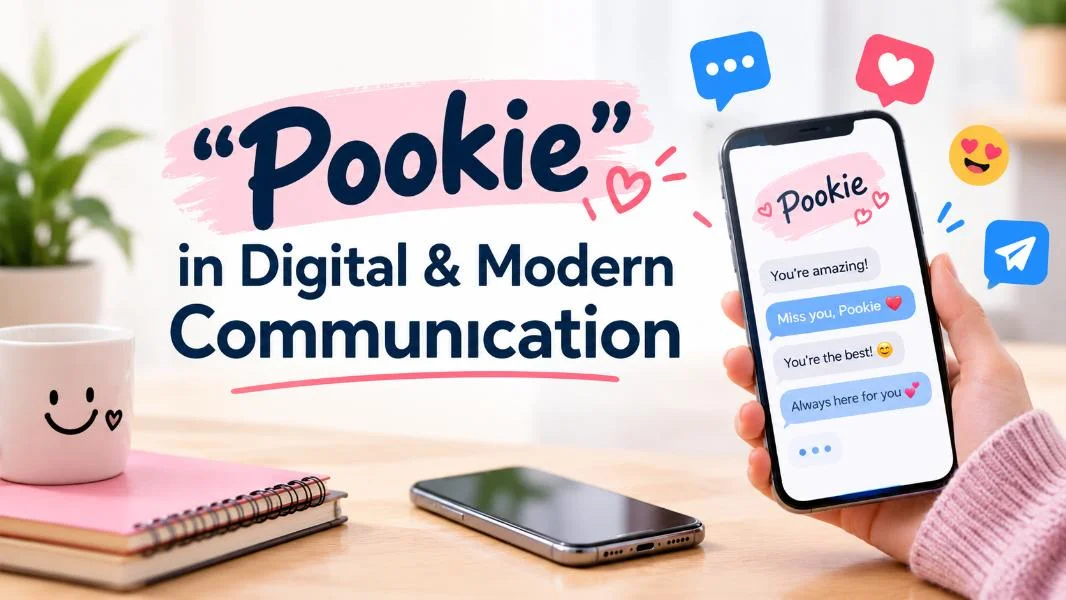
Digital communication has helped Sweetheart become more widely recognizable. Its short length and affectionate tone make it suitable for informal messages, comments, captions, and online jokes.
Emails
Sweetheart generally belongs in personal emails between people who already use affectionate nicknames.
Example:
“Hey, Sweetheart! I attached the photos from our weekend trip. The ones from the beach turned out better than I expected.”
In a business email, use a professional greeting instead.
Slack and WhatsApp
On WhatsApp, Sweetheart can be a natural nickname between partners or close friends. On Slack, however, it is usually better reserved for a private conversation where the relationship and workplace culture make it appropriate.
Example:
“Sweetheart , I’m running about ten minutes late. Save me a seat if you get there first!”
This works as an informal message between close people, but it would not be appropriate for every workplace channel.
Social Media
Sweetheart appears in affectionate captions, couple videos, comments, and memes. It may refer to a partner, friend, pet, or favorite online personality.
Examples include:
- “Date night with my Sweetheart.”
- “My Sweetheart deserves the whole world.”
- “POV: your Sweetheart says they don’t want dessert, then eats yours.”
The final example uses humor rather than a literal declaration of affection.
AI-Generated Summaries
AI-generated summaries, captions, and message suggestions may use Sweetheart when the requested style is playful or affectionate. However, an assistant should not automatically insert intimate nicknames into every message.
For example, a suitable personal caption might be “Weekend adventures with my Sweetheart,” while a professional summary should simply identify the people involved by name or role.
Practical guidance: When using AI to write messages, specify the intended relationship and tone. Asking for “a warm message to my partner” is more useful than requesting affection without context.
Linguistic & Communication Insight
Sweetheart illustrates how language communicates more than literal meaning. Its effect comes from the relationship between the word, the speaker, the recipient, and the situation.
Emotional Weight and Subtext
A nickname can communicate familiarity, affection, teasing, or a sense of belonging without stating those feelings directly. Sweetheart is particularly flexible because it does not have one fixed relationship meaning.
When a romantic partner uses the word privately, it may express tenderness. When a friend uses it in a group chat, it may be a humorous sign of closeness. When a stranger uses it, the same expression may feel overly familiar.
The emotional meaning therefore comes partly from the relationship history and the expectations shared by the speakers.
Direct vs. Indirect Phrasing
Sweetheart is not a direct instruction or a formal statement. It is a form of address that adds an emotional layer to a message.
Compare these examples:
- Neutral: “Can you call me when you get home?”
- Affectionate: “Sweetheart , can you call me when you get home?”
- Supportive: “Hey, love, let me know when you’re home safely.”
The underlying request remains similar, but the nickname changes the interpersonal tone. It can make the request sound warmer without changing its urgency or practical meaning.
In sensitive situations, however, a nickname may soften a message so much that the seriousness becomes less clear. In those cases, direct but considerate language is preferable.
Professional Communication Perspective
Professional communication usually benefits from language that is clear, respectful, and appropriate to the relationship. Sweetheart may be acceptable in an established personal friendship at work, but it is rarely suitable as a default form of address.
Experienced communicators distinguish between friendliness and familiarity. A friendly message can still be professional without using an intimate nickname.
For example, “Thanks for sorting that out, Alex. I really appreciate your help” sounds warm and respectful without assuming a personal relationship.
Pragmatic Reasons for Choosing Alternatives
People choose different affectionate expressions for practical reasons:
- To reduce defensiveness: A gentle, familiar expression may make a lighthearted comment feel less confrontational when the relationship supports it.
- To signal collaboration: A supportive phrase can communicate care while keeping attention on a shared goal.
- To balance warmth and authority: Using a person’s name with a respectful message often works better than using an intimate nickname in professional settings.
- To avoid ambiguity: A neutral greeting makes the intended relationship clearer when people do not know each other well.
- To respect boundaries: Choosing an expression the recipient welcomes demonstrates consideration.
These benefits depend on context. An affectionate nickname can also increase discomfort if the recipient does not welcome it.
Social Signaling
Word choice helps people communicate the kind of relationship they believe they share. Sweetheart may signal affection, informality, playfulness, or membership in an online community.
The signal is not always received as intended. A person may use the nickname to be friendly while the recipient interprets it as flirting. This difference between intention and interpretation is a common feature of everyday communication.
The most effective communicators pay attention to the response, adjust their wording, and avoid assuming that shared vocabulary automatically means shared feelings.
Tone and Context Guidance
Use Sweetheart when the recipient welcomes affectionate language and the setting supports informality. Choose sweetheart or honey when those terms fit the relationship better, and use the person’s name when clarity or professional distance matters.
The key is to consider three questions:
- Relationship: How close are the people involved?
- Purpose: Is the message meant to comfort, tease, flirt, or communicate practical information?
- Audience: Could another person reasonably misinterpret the nickname?
These questions help you choose language that feels natural without becoming presumptuous.
Conclusion
Sweetheart is a popular term of endearment that expresses affection, closeness, and playfulness in everyday communication. Although it is often associated with romantic partners, the nickname can also be used for close friends, family members, children, and beloved pets. Its meaning depends on the relationship, the speaker’s intention, and the situation in which it appears.
Exploring alternatives to Sweetheart helps you choose words that better match your feelings and communication style. Expressions such as sweetheart, darling, honey, and sweetie offer familiar warmth, while babe and baby often suggest greater intimacy. For friendships, bestie communicates a more clearly platonic connection, whereas sunshine adds a cheerful, encouraging touch.
The most suitable expression is one that feels natural and comfortable to both people. Consider your audience, relationship, and intended tone before using an affectionate nickname. In professional or sensitive situations, a person’s name or a neutral form of address is usually more appropriate. Ultimately, thoughtful word choice makes communication more personal, respectful, and meaningful.
FAQs
1. What does Sweetheart mean in slang?
Pookie is an informal term of endearment used to express affection, fondness, or closeness. People commonly use it for romantic partners, close friends, children, or pets. The word can sound sweet, playful, or humorous depending on the situation. Its meaning is not limited to romantic relationships and varies with personal preferences and context.
2. Is Sweetheart a romantic nickname?
Sweetheart can be a romantic nickname, but it does not always indicate romantic interest. Couples often use it to express affection, while friends may use it playfully. Some people also use the word for family members or pets. To understand its intended meaning, consider the relationship, conversation, and way the person uses the nickname.
3. What are the best synonyms for Sweetheart?
Popular alternatives to Sweetheart include sweetheart, darling, honey, sweetie, babe, baby, cutie, boo, angel, and sunshine. Each expression has a slightly different tone. Sweetheart and honey communicate familiar affection, while babe and baby often sound more intimate. Bestie is particularly suitable when you want to emphasize friendship rather than romance.
4. Can you call a friend Sweetheart?
Yes, you can call a friend Sweetheart if both of you are comfortable with affectionate or playful nicknames. Friends sometimes use it as an inside joke or a way to express closeness. However, not everyone enjoys pet names. Consider your friend’s preferences and the nature of your relationship before using the expression.
5. Is Sweetheart appropriate for professional communication?
Pookie is generally too informal for professional communication, especially in emails, presentations, client conversations, and formal meetings. It may suggest unwanted intimacy or make a message appear unprofessional. Using the recipient’s name is usually a safer option. In an established friendship at work, the nickname may be acceptable in an informal private conversation.
6. What is the difference between Pookie and sweetheart?
Sweetheart is generally playful, informal, and associated with contemporary internet culture. Sweetheart is a more traditional term of endearment that communicates affection, care, or tenderness. Both can describe romantic or family relationships, but sweetheart may sound more familiar across generations. The best choice depends on the relationship and the tone you want to convey.
7. Is Pookie used in American and British English?
Pookie is understood in both American and British English, particularly among people familiar with online slang. Its popularity and everyday use vary by age, social circle, and personal preference. British speakers may also use expressions such as love or darling, while American speakers may commonly encounter honey or sweetie. These are general tendencies, not strict rules.
8. Why has Sweetheart become popular on social media?
Sweetheart has gained visibility through relationship videos, memes, captions, and informal online conversations. Its short, affectionate sound makes it easy to incorporate into humorous or sentimental content. Social media allows expressions to spread quickly across communities and countries. However, popularity online does not mean everyone uses or interprets the nickname in the same way.
9. Is Sweetheart a gender-specific term?
No, Sweetheart is not inherently gender-specific. People can use it for partners, friends, children, or pets regardless of gender. Its meaning comes from the relationship and the speaker’s intention rather than a person’s gender. As with any nickname, it is best to respect the recipient’s preferences and avoid assuming that everyone welcomes affectionate forms of address.
10. What should I say instead of pookie in a text message?
Choose an alternative that matches your relationship and intended tone. Use sweetheart or honey for familiar affection, babe for an intimate relationship, bestie for a close friend, or sunshine for an encouraging message. If you are unsure whether a nickname is welcome, using the person’s name keeps your message friendly without assuming an extra level of familiarity.